KUALA LUMPUR – The Public Accounts Committee (PAC) has found weaknesses in the governance of Education Malaysia Global Services (EMGS), a one-stop centre to manage visa applications by international students.
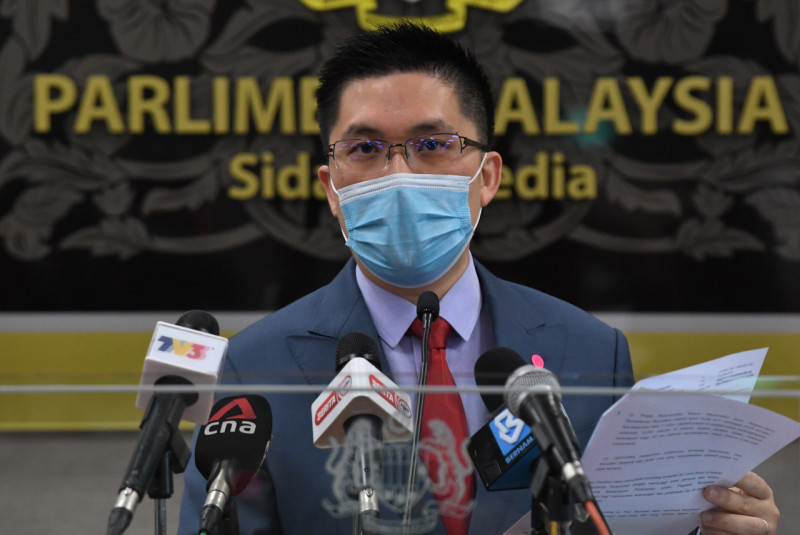
PAC chairman Wong Kah Woh, in a statement today, said among the shortcomings are the absence of a government representative on the board of directors at certain times, including during the appointment of an interim chief executive on January 17 last year, and the shortening of the appointment period of the former CEO on February 24 the same year.
He said the committee found that the appointment of interim CEO Shahinuddin Shariff was not in accordance with corporate governance practice because the tenure of the chief executive at that time, Datuk Dr Rujhan Mustafa, was still in effect.
“PAC also found that a senior manager had been appointed by EMGS on a contract basis, but administratively placed in the education minister’s office as a special officer. EMGS did not receive any benefit from this appointment, and bore a salary of RM71,500 for the period from November 1, 2018 to April 15, 2019.”
The committee today presented its report on the EMGS management based on its inquiry that started in September last year, following the Auditor-General’s Report 2018 Series 1 that was tabled in Parliament on July 15.
Wong said PAC found that the Student Application Registration System (STARS) is weak in terms of data storage, especially the check-out memo, resulting in the failure to monitor the issue of overstaying students.
“Also, there was negligence in critical and essential data safety regarding foreign students in this country that was managed by a private company without supervision from the Higher Education Ministry.”
He said PAC recommends that government agencies, statutory bodies and government-linked companies ensure there is a government representative on their boards, so that every decision made is in line with ministry directives.
STARS has to be improved in terms of data storage, and the Higher Education Ministry has to ensure all data in the system is stored, supervised and owned by EMGS and the ministry, and not given to, or supervised by, a vendor.
He said the ministry has to outline a new business model for EMGS since the admission of foreign students needs to be increased to assist public and private higher education institutions, particularly post-pandemic. – Bernama, December 8, 2020
















_Datuk_Rusdi_Mohd_Isa._Facebook_pic..png)